Cheque Bounce Cases in India: Understanding Section 138 of the Negotiable Instruments Act
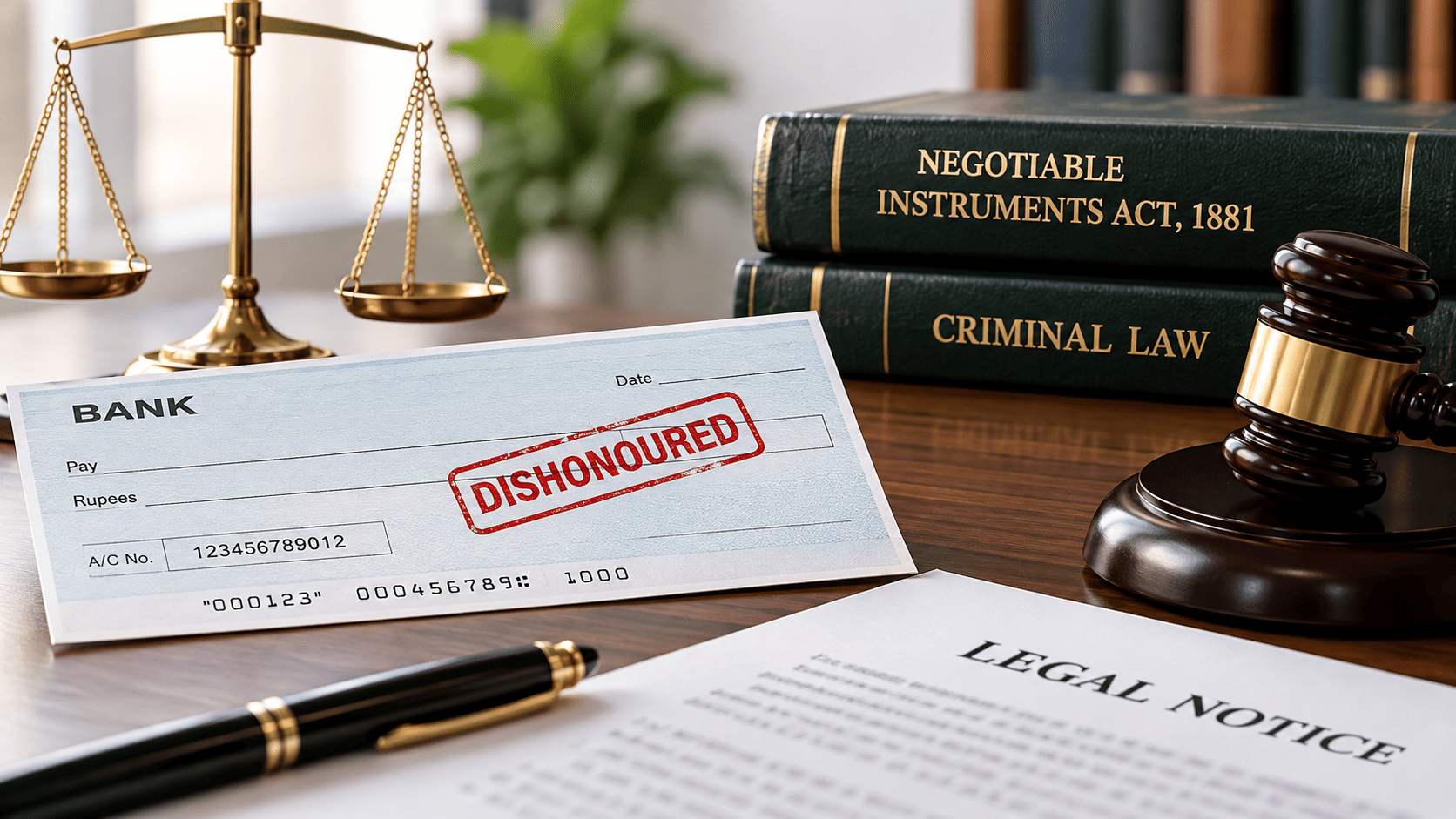
A cheque is commonly used for business transactions, personal payments, and repayment of financial obligations. When a cheque is returned unpaid, it can create financial difficulties and legal complications. Section 138 of the Negotiable Instruments Act, 1881, provides a legal framework for certain cases involving dishonoured cheques.
Understanding the applicable legal procedure, statutory notice requirements, and relevant deadlines is important for both the person who issued the cheque and the person who received it. This article explains the general process in India.
What Is a Cheque Bounce Case?
A cheque bounce occurs when a bank returns a cheque without making payment. This may happen for reasons such as insufficient funds or where the amount exceeds the arrangement made with the bank.
Section 138 applies when its statutory conditions are satisfied, including the requirement that the cheque relates to a legally enforceable debt or other liability. Not every dishonoured cheque automatically results in an offence under this section.
What Is Section 138 of the Negotiable Instruments Act?
Section 138 of the Negotiable Instruments Act, 1881, addresses the dishonour of certain cheques for insufficiency of funds or where the amount exceeds the agreed banking arrangement. The provision establishes specific requirements relating to presentation of the cheque, written demand notice, and failure to make payment within the prescribed period.
Depending on the circumstances and applicable law, a person facing a cheque bounce dispute may need to consider the available legal remedies and procedural requirements.
Important Legal Timelines in Cheque Bounce Cases
Some important statutory timelines under Section 138 include:
- Cheque presentation: The cheque must be presented within the applicable validity period.
- Legal demand notice: The payee or holder in due course must issue a written demand notice within 30 days of receiving information from the bank about dishonour.
- Payment period: The drawer has 15 days from receipt of the notice to make the demanded payment.
- Complaint limitation: Section 142 generally requires a complaint to be filed within one month from the date the cause of action arises, subject to the applicable statutory provisions, including possible condonation of delay for sufficient cause.
Important: These timelines are legally significant. The exact calculation of limitation periods, service of notice, and the applicability of statutory requirements should be assessed based on the facts and relevant legal provisions.
What Should You Do After a Cheque Is Dishonoured?
1. Keep the Relevant Documents
Preserve the original cheque, bank return memo, transaction records, invoices, agreements, payment records, and other documents that may establish the underlying transaction. These documents may be relevant when assessing the dispute.
2. Review the Reason for Dishonour
Read the bank's return memo carefully. The reason for dishonour and the circumstances of the transaction can affect the legal assessment of the matter.
3. Check the Notice Requirements
Where Section 138 applies, the written demand notice must comply with the relevant statutory requirements. Dates, the amount demanded, the underlying liability, and proof of service may require careful review.
4. Understand the Available Legal Options
Depending on the facts, the parties may consider payment, settlement, or appropriate legal proceedings. The appropriate course of action depends on the documents, applicable law, and procedural stage of the matter.
Can a Cheque Bounce Matter Be Settled?
Certain offences under the Negotiable Instruments Act, including those under Section 138, are compoundable under Section 147. This means that a matter may be settled in accordance with the applicable law and procedure.
The terms of a settlement should be clearly recorded, and the appropriate steps should be taken before the relevant court where required. The effect of settlement depends on the circumstances and procedural stage of the case.
Frequently Asked Questions
Is every bounced cheque a criminal offence?
No. Section 138 applies only when its statutory conditions are satisfied. The reason for dishonour, the existence of a legally enforceable debt or liability, and compliance with notice and payment requirements are important.
How much time is allowed to issue a cheque bounce notice?
Section 138 generally requires the written demand notice to be issued within 30 days of receiving information from the bank about the cheque's dishonour.
What happens if payment is not made within 15 days?
If the drawer does not make the payment within 15 days of receiving the statutory notice, a cause of action may arise for filing a complaint, provided the other applicable legal requirements are satisfied.
Can I defend a cheque bounce complaint?
A person facing a complaint may raise legally available defences based on the evidence, documents, transaction, and applicable law. The merits of a defence depend on the specific facts of the case.
Conclusion
Cheque bounce matters require careful attention to documentary evidence, statutory notices, limitation periods, and court procedures. Understanding the provisions of the Negotiable Instruments Act, 1881, can help individuals and businesses make informed decisions when dealing with a dishonoured cheque.
Expert Legal Services is a legal practice based in Andheri West, Mumbai, with practice areas that include cheque bounce matters, criminal law, civil law, family law, and legal drafting and advisory.